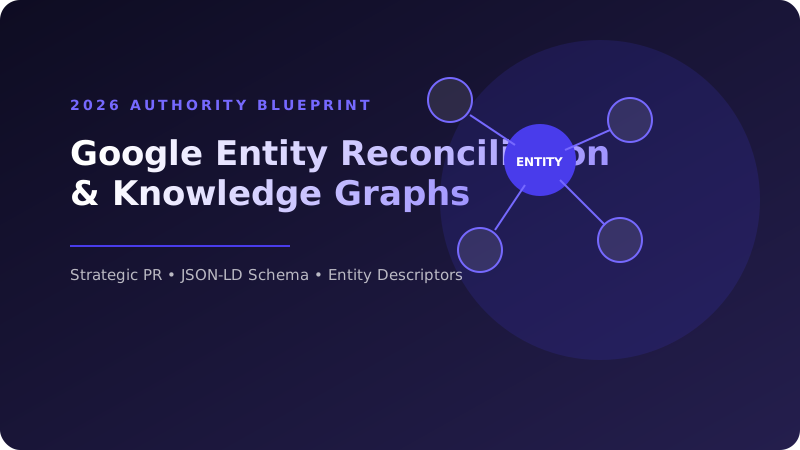
In 2026, search algorithms no longer evaluate websites solely based on keyword density or raw backlink counts. Google’s search engine operates as an entity-first Knowledge Graph engine, prioritizing verifiable facts, authoritative relationships, and brand identities.
1. Understanding Entity Reconciliation
Entity reconciliation is the algorithmic process by which a search engine confirms that a founder, executive, corporate organization, or product is a distinct, real-world entity with verifiable attributes.
When Google identifies consistent data across your official corporate website, press coverage in recognized industry publications, structured database records, and executive profiles, it merges these sources into a unified Knowledge Graph entry.
"Entity authority cannot be forged with automated link schemes. It requires verifiable citations across trusted third-party press outlets paired with strict schema descriptors."
2. JSON-LD Schema Architecture
Your website’s technical code serves as the primary ground-truth declaration for search crawlers. Implementing structured JSON-LD schema with explicit sameAs arrays linking to official press features, Wikidata entries, and executive profiles eliminates disambiguation errors.
3. Accredited Press as Authority Anchors
Media coverage across recognized publications acts as the definitive third-party confirmation search algorithms look for. Organic editorial features, executive interviews, and industry commentaries validate that your brand entity exists in the real market economy.
4. Ethical Compliance & Mistakes to Avoid
Avoid buying low-quality press release distribution spam or attempting to trick search engines with unverified Wikidata entries. True Knowledge Panel recognition stems from genuine eligibility, transparent documentation, and consistent digital entity management.