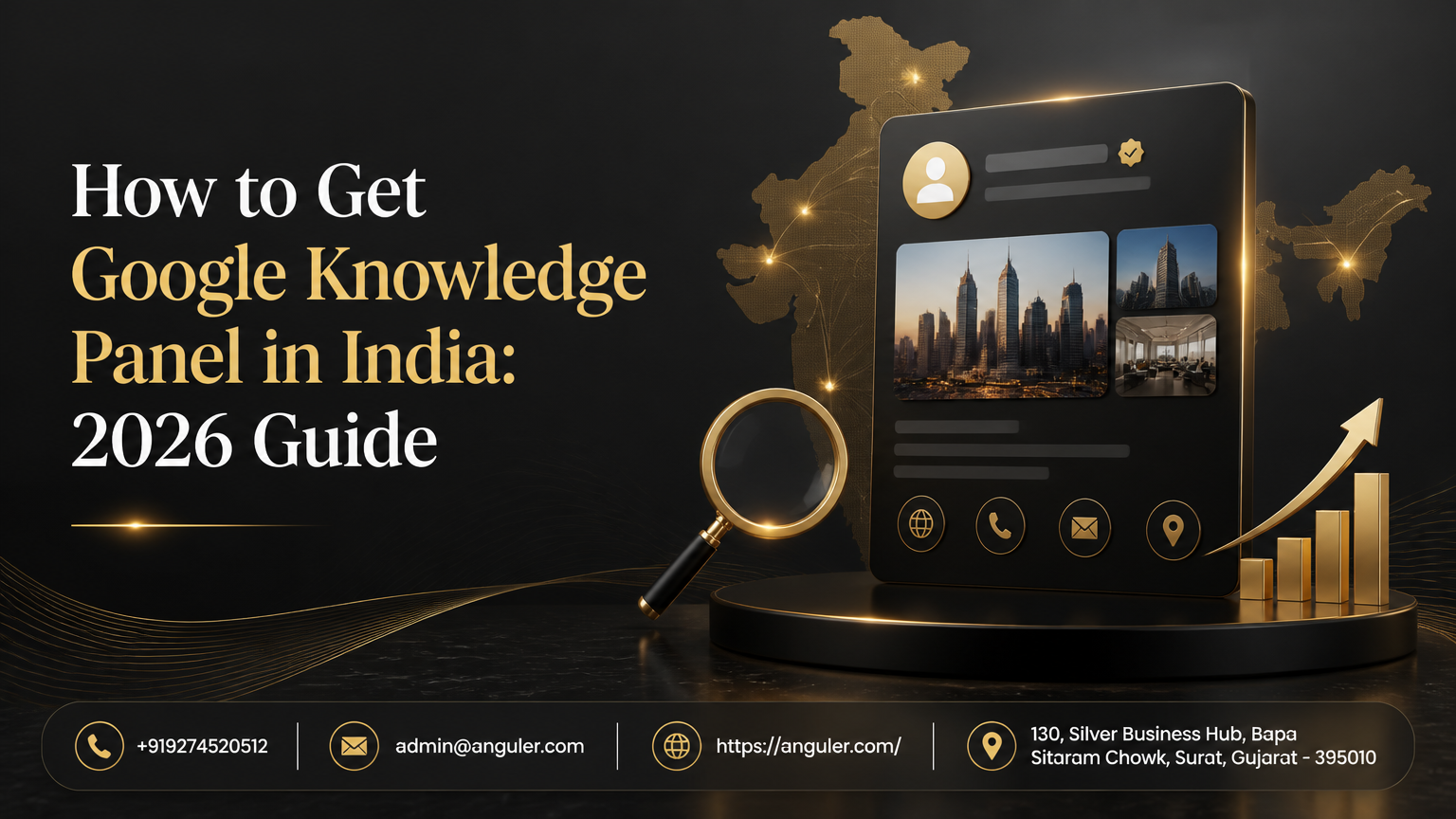
When someone searches your brand or name on Google, what appears? If a branded information box with your logo, description, and key facts shows up beside the results — that's a Google Knowledge Panel. For Indian businesses and professionals in 2026, earning this panel has become essential. Google's AI Overviews now serve 1.5 billion monthly users, and India was the first market outside the US to receive AI Mode in Search. Brands without structured entity data risk being invisible in AI-generated answers. This guide walks you through how to get a Google Knowledge Panel in India — no shortcuts, no paid placements, just a proven framework built on verifiable data.
TL;DR / Quick Answer
A Google Knowledge Panel is an auto-generated info box that appears when Google's Knowledge Graph recognizes your brand as a distinct entity. To earn one in India, you need an Entity Home Page with Organisation schema, a Wikidata entry with India-specific references, consistent citations across directories like JustDial and IndiaMART, and corroboration from trusted domains. It cannot be purchased — only earned through structured, verifiable data.
1. What Is a Google Knowledge Panel and How Does Google Generate One?
A Google Knowledge Panel is the structured information box that appears when Google's Knowledge Graph identifies a query as referring to a distinct entity — a business, person, or concept. Unlike ads or featured snippets, Knowledge Panels cannot be purchased. Google generates them algorithmically by pulling data from its Knowledge Graph, which maps relationships between billions of entities using trusted sources like Wikidata, Wikipedia, official websites, and corroborative third-party citations.
In 2025, Google expanded Knowledge Panel "cards" — horizontal and vertical layouts previously limited to person entities — to corporate entities, adding filter pills and AI-driven multi-source descriptions. For Indian brands, the Knowledge Panel in 2026 feeds directly into Google's AI Overviews and AI Mode, now available in eight Indian languages. Working with an entity strategy and digital authority partner that understands Knowledge Graph architecture helps structure the data Google actually recognizes.
2. Why Indian Businesses Need a Knowledge Panel in 2026
India was the first country outside the US to receive Google's AI Mode in Search. Google's official India blog confirms AI Overviews serve over 1.5 billion users monthly, driving a more than 10% increase in query usage in its biggest markets. More people use Google Lens in India every month than in any other country. Brands whose entity data feeds the Knowledge Graph will be cited in AI-generated answers — those without a Knowledge Panel risk being invisible in the most important search surfaces of 2026.
A Knowledge Panel also signals trust. When investors, partners, or customers search your brand, a verified panel validates legitimacy instantly. For Indian SaaS founders, executives, and growing businesses, this credibility translates into deal flow, partnerships, and brand recall. Anguler Innovations's PR and Digital Authority services have helped brands build the structured entity data and media authority required for panel recognition — their Vanguard Founder Authority case study documents this approach in detail.
3. Eligibility Checklist: Does Your Brand Qualify for an India Knowledge Panel?
Google doesn't publish a strict eligibility form for Knowledge Panels, but Kalicube Pro's research — tracking 7.3 million Knowledge Graph IDs and over 3 billion data points — provides concrete benchmarks. Their dataset shows only 3.65% of monitored domains qualify as Google "isReference" domains, and a brand typically needs around 30 entity-validated URLs from these trusted sources to trigger a stable panel. A Wikidata entry can reduce that requirement to roughly half a dozen corroborative sources.
For an India-specific eligibility check, verify these baselines: consistent Name, Address, and Phone (NAP) across at least 50 citations; an official Entity Home Page with structured data; presence on 3+ social platforms with consistent branding; a Google Business Profile for local visibility; and at least one structured database entry (Wikidata, Crunchbase, or Clutch). Indian businesses should also ensure their MCA registration and GSTIN are publicly accessible — these government-verified data points uniquely strengthen entity trust signals in the Indian market.
4. Step 1: Search and Claim Your Existing Knowledge Panel
Search your exact brand name and founder's name on Google first. If a Knowledge Panel appears — even an incomplete one — claim it via the three-dot menu or "Claim this knowledge panel" button. Verify ownership through your Google account, YouTube channel, Twitter/X profile, Facebook page, or Search Console. Claiming gives partial editorial control: you can suggest changes to descriptions, social profiles, and featured images, though Google reviews all suggestions before accepting them.
If no panel exists, don't attempt shortcuts — follow the entity-building steps below. Starting with a Google Knowledge Panel entity strategy service that audits your existing digital footprint reveals whether dormant signals already exist that need consolidation rather than creation from scratch. This discovery phase prevents wasted effort and identifies which entity data Google already recognizes about your brand before investing in new citations, schema, or Wikidata entries.
5. Step 2: Build Your Entity Home Page with Organisation Schema
Your Entity Home Page is the URL Google's Knowledge Graph treats as the authoritative source for your entity. For Indian businesses, this is typically your About page or homepage. It must contain your canonical business name, description, founding details, leadership info, contact details, and a sameAs array linking every verified social profile and database entry. Implement Organisation schema (JSON-LD) with @type: Organization, name, url, logo, sameAs, foundingDate, address (addressCountry: IN), contactPoint, and areaServed for Indian cities.
Validate using Google's Rich Results Test and Schema Markup Validator. Ensure NAP data in your schema matches your Google Business Profile, MCA registration, and GSTIN records exactly. This technical foundation makes or breaks entity recognition. Projects like the Nexus Enterprise Cloud SaaS case study demonstrate how structured entity data combined with custom web development establishes the digital foundation Google's Knowledge Graph requires.
6. Step 3: Create a Wikidata Entry with India-Specific Q-IDs
Wikidata is the most powerful Knowledge Panel trigger because it's the structured database Google's Knowledge Graph references most directly. Go to wikidata.org, create an account, and start a new item. Enter your brand name, a short description, and for Indian entities, include country code Q668 (India) and the relevant city Q-ID — Q1070 for Mumbai, Q1352 for Surat, Q9883 for Delhi, Q1353 for Bengaluru. Add statements: instance of (Q43229 for organization), headquarters location, official website, founding date, and social media accounts with reference URLs pointing to verifiable sources.
For bilingual entities, add labels in Hindi (Q1568) and regional languages to match vernacular search patterns. Google has been sourcing Knowledge Panel descriptions from its own algorithms and licensed data partners rather than solely from Wikipedia, making a well-referenced Wikidata entry more valuable than ever. The goal isn't Wikipedia notability — it's providing Google's Knowledge Graph with a verified, machine-readable entity anchor that corroborates all other structured data you've built across your Entity Home Page, citations, and social profiles.
7. Step 4: Build Tiered Citations on India and Global Directories
Citations are corroborative signals that reinforce your entity data in Google's Knowledge Graph. For Indian businesses, use a tiered approach. Tier 1 (India-specific): JustDial, Sulekha, IndiaMART, TradeIndia, and Yellow Pages India. Tier 2 (global databases): Crunchbase, Clutch, GoodFirms, G2, and LinkedIn Company Pages. Tier 3 (media and press): features on recognized news platforms, industry publications, and podcast circuits. The critical factor isn't volume — it's consistency. Every citation must replicate your exact NAP, founding date, and social URLs.
Kalicube's research indicates roughly 30 isReference domain endorsements create a stable panel, though a Wikidata entry reduces this significantly. Indian businesses should also target government-linked directories: the MSME Udyam registration portal, Startup India directory, and MCA company master data. Media placements and press amplification across recognized publications create Tier 3 signals most Indian competitors miss, yet these carry outsized weight in Google's entity corroboration algorithm. Anguler Innovations's media placements and press amplification service is purpose-built for this tier of citation building.
8. Step 5: Optimize Google Business Profile for Local Knowledge Panels
A Google Business Profile (GBP) doesn't automatically generate a branded Knowledge Panel, but it serves as a foundational local entity signal. Verify your GBP through postcard, phone, or video verification — Google expanded video verification in 2025 for businesses proving physical presence. Complete every field: business name (matching your MCA registration exactly), categories, service area, phone, website URL, hours, and attributes. Upload quality office and team photos, and post Google Updates regularly to signal entity activity.
For founders pursuing a personal Knowledge Panel rather than a business one, focus on building entity authority around your name specifically. Combine LinkedIn optimization, press features, and structured Person schema on your personal website. The key distinction: GBP optimizes local map results, while a branded Knowledge Panel requires broader entity corroboration across the Knowledge Graph — the two serve different but complementary purposes in your overall digital authority strategy.
9. India-Specific Signals: MCA, GSTIN, Udyam, and Vernacular Entity Data
Indian businesses have unique entity verification signals most global Knowledge Panel guides overlook entirely. Your Ministry of Corporate Affairs (MCA) registration and Corporate Identification Number (CIN) are publicly searchable government-verified references. Your GSTIN adds another verifiable data layer tied to your registered business address. MSME/Udyam registration links to the government's small business database. These registrations provide corroboration Google's Knowledge Graph can cross-reference, making them powerful trust signals uniquely available to Indian entities.
For vernacular optimization, add Hindi, Tamil, Bengali, or other regional language labels to your Wikidata entry. Google's AI Mode supports eight Indian languages, and entity disambiguation for regional queries increasingly depends on multilingual structured data. If your brand name has a Hindi transliteration users commonly search, include it in Wikidata aliases, your schema's alternateName field, and social profile bios. This bilingual approach positions Indian entities for Knowledge Panel visibility across both English and vernacular search surfaces in 2026.
10. Common Mistakes Indian Brands Make (and How to Fix Your Panel)
The most frequent mistake is inconsistent NAP data. If your Google Business Profile says "Silver Business Hub" but your website says "Silver Biz Hub," Google's entity reconciliation algorithm treats them as different entities, fragmenting your Knowledge Graph signal. Audit every citation for identical business name, address, and phone number. Another common error is expecting a Google Business Profile alone to trigger a branded Knowledge Panel — GBP optimizes local map results but doesn't create a panel without broader entity corroboration.
Indian brands also skip Wikidata assuming Wikipedia is required — it isn't. A well-referenced Wikidata entry with proper Q-IDs is the stronger trigger. Finally, brands build entity signals once and stop. Knowledge Panels degrade or display stale information if the underlying data becomes outdated. Continuous entity reconciliation — checking citations, schema validity, and Wikidata references quarterly — ensures your panel remains accurate. For ongoing panel monitoring, Anguler Innovations's reputation management services provide systematic entity health checks.
11. 90-Day Roadmap to Earn Your Google Knowledge Panel in India
Days 1–15: Audit and Foundation. Search your brand and founder names on Google. Document any existing panels. Audit NAP consistency across all citations. Build or update your Entity Home Page with complete Organisation schema and sameAs array. Validate with Rich Results Test and Schema Markup Validator.
Days 16–45: Entity Anchoring. Create or update your Wikidata entry with India-specific Q-IDs and referenced statements. Build Tier 1 citations on JustDial, Sulekha, IndiaMART, and TradeIndia. Verify and fully optimize your Google Business Profile.
Days 46–75: Citation Amplification. Build Tier 2 citations on Crunchbase, Clutch, LinkedIn Company, and G2. Secure Tier 3 media placements on recognized publications. Add vernacular entity variants to Wikidata and schema. Reference MCA, GSTIN, and Udyam data in structured citations.
Days 76–90: Monitor and Reconcile. Check Google for emerging panel signals. Use "Suggest an edit" to correct incorrect data. Continue building corroborative citations. Validate all schema and Wikidata references. To start a project with Anguler Innovations on structured entity strategy and media authority building, consult specialists who combine PR amplification with technical entity architecture.
12. Tools, Templates, and FAQs for India Knowledge Panel Success
Essential Tools: Google Rich Results Test and Schema Markup Validator for structured data validation. Wikidata Query Service for checking existing Q-IDs and entity relationships. Kalicube Pro for tracking Knowledge Graph visibility and isReference domains. Google Search Console for monitoring branded search impressions and panel-related queries over time.
Template Checklist: Organisation JSON-LD schema with sameAs, alternateName, and areaServed for Indian cities. Wikidata entry template with Q668 country code, city Q-IDs, and Hindi labels. Citation tracking spreadsheet for 50+ directories with NAP consistency columns. Person schema template for founders pursuing personal Knowledge Panels. For deeper guidance, explore insights and news on digital authority, or visit the FAQ center for questions about panel timelines and processes.
13. Conclusion
Earning a Google Knowledge Panel in India in 2026 is about providing Google's Knowledge Graph consistent, verifiable, and corroborated entity data. From your Entity Home Page with proper Organisation schema to a Wikidata entry with India-specific Q-IDs, each step reinforces the signals Google needs to recognize your brand as a distinct entity. With AI Overviews and AI Mode reshaping Indian search, brands investing in structured entity authority today will be cited in tomorrow's AI-generated answers.
Schedule a strategic consultation to begin building your Knowledge Panel entity strategy on an ethical, eligibility-based foundation.
14. Frequently Asked Questions
A Google Knowledge Panel is an auto-generated information box that appears in search results when Google's Knowledge Graph recognizes a query as referring to a distinct entity such as a business, person, or place. It cannot be purchased — only earned through verifiable structured data.
Brands with consistent citations and a Wikidata entry may see a panel within 4–8 weeks. New entities building signals from scratch typically need 90–180 days of structured, consistent effort across schema, Wikidata, and citation platforms.
No. A well-referenced Wikidata entry with proper Q-IDs and corroborative citations from trusted domains is often sufficient — and frequently a stronger trigger than Wikipedia alone for Knowledge Panel generation.
No. Knowledge Panels are algorithmically generated based on entity data in Google's Knowledge Graph. They cannot be purchased or directly requested from Google under any program.
A Google Business Profile manages your Google Maps and local search presence. A Knowledge Panel is a broader entity recognition asset appearing for branded searches across all of Google Search. GBP contributes to but does not guarantee a Knowledge Panel.
MCA/CIN, GSTIN, and Udyam registration provide government-verified entity data that uniquely strengthens trust signals in the Indian market. Google's Knowledge Graph cross-references these public registrations as corroboration.
Claim your panel through Google's verification process, then use "Suggest an edit" to propose corrections. For persistent errors, ensure your Entity Home Page and Wikidata entry contain correct information, as Google prioritizes these structured sources.
Related Guides & Insights
How Anguler Innovations PR Services Build Digital Authority →
Our 6-phase PR & Tech model for verifiable search visibility.
Media Placements for Startups India: Build Market Authority →
Securing earned press in news, industry, and podcast circuits.